
 close
close

We've brought all our trackers and market indices together in a single hub page. Please Register and Login to access this free content.


Caught in crossfire: India faces LPG supply crunch
The escalated armed conflict in the Middle East has sent ripples across global energy markets, but few countries are as exposed as India. As one of the world’s largest importers of LPG, the country now faces a critical supply gap, following the ‘technical’ closure of the Strait of Hormuz.
While the government has been struggling to source LPG from alternative suppliers, technical constraints in refining and LPG production, razor-thin reserves, and longer voyagers from the alternative suppliers suggests that relief will be neither quick nor straightforward.
India’s LPG import dependence and the Middle East factor
India’s LPG demand has grown steadily over the past decade, with consumption reaching 33 million tonnes in 2025, driven by rising residential consumption. However, its domestic LPG production caters to less than 40% of demand, leaving the country heavily dependent on imports. This is further amplified by the concentration of supply sources, with 90% of the supply coming from the Middle East.
India is gradually diversifying its supply sources, with the share of the US increasing to 6% in 2025 and expected to rise further to 10% in 2026 (and possibly more), following the supply agreement for 2.2 million tonnes of US LPG signed by Indian refiners in October 2025.
The hidden vulnerability: 10-day reserve
The current crisis has exposed a structural weakness: India’s lack of strategic LPG reserves. Unlike crude oil, for which the country maintains significant strategic reserves, the LPG supply chain operates on a ‘just-in-time’ basis, with current LPG reserves sufficient for only 7–10 days of consumption. Thus, disruption at the Strait of Hormuz put instant pressure on inventories and led to domestic shortages. Without robust stockpiles, the country remains one shipping delay away from an LPG supply shortage.
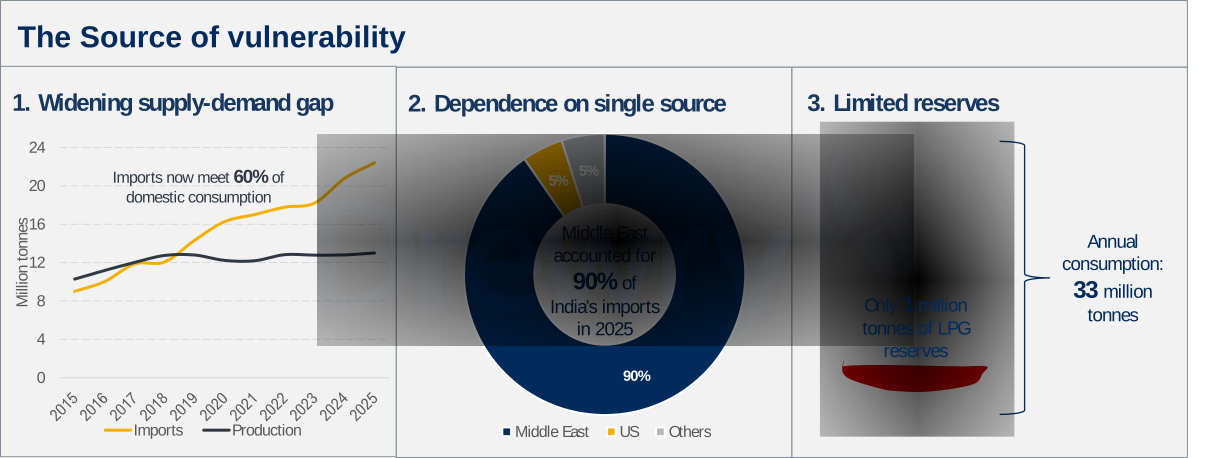
Note: Others include Russia, Norway, Argentina, and Australia.
Source: Drewry Maritime Research, TDM
LPG shortage crisis looming?
Drewry projects a supply gap of 1.0 million tonnes during March and April 2026, despite the emergency measures implemented by the Indian government.
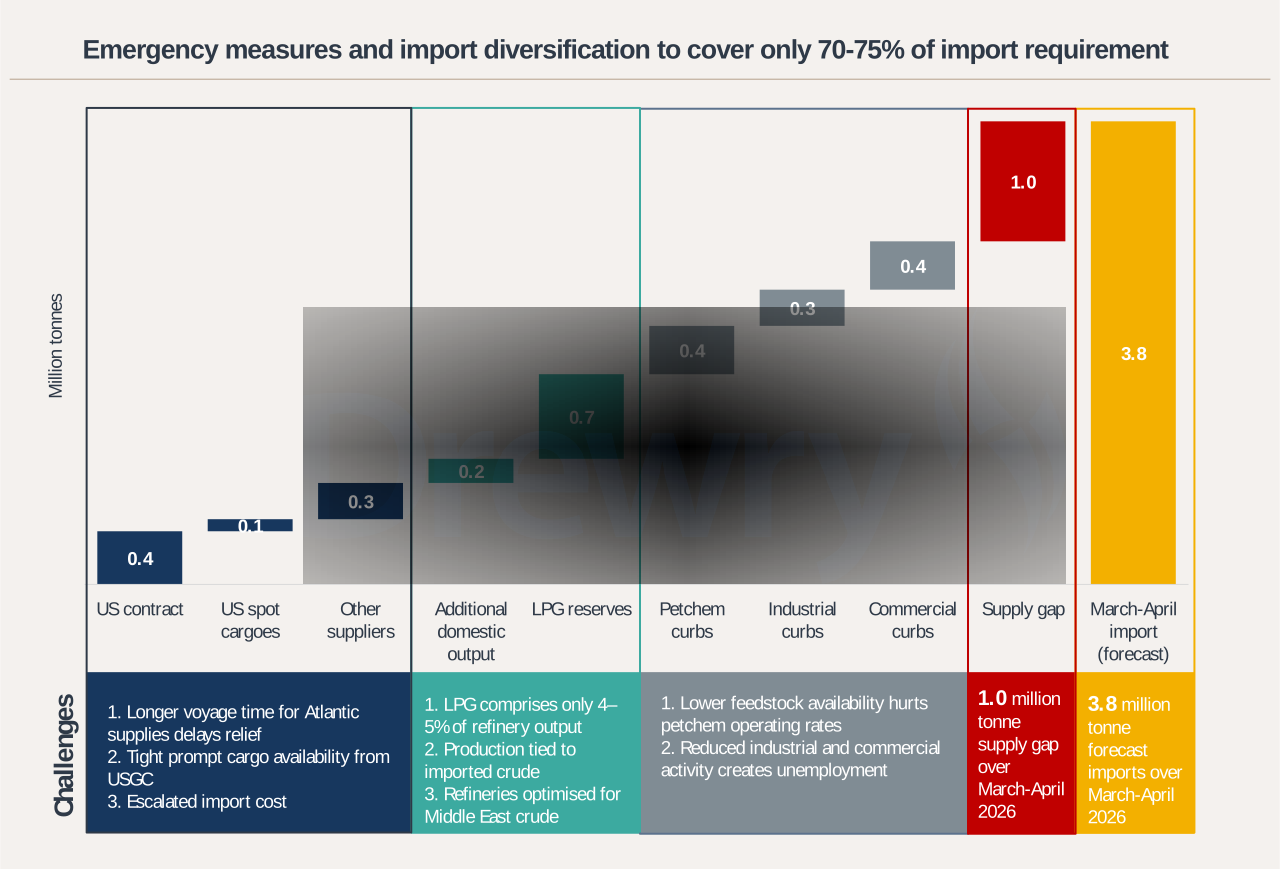
Note: Figures over March-April 2026 are calculated considering 2026 import forecast and factoring in cyclical factors.
Source: Drewry Maritime Research
Steps have been taken to manage the crisis, but relief remains limited
Faced with supply concerns, the government implemented several emergency measures to manage the shortage. However, structural constraints mean that these efforts can only provide limited relief in the short term.
1. Scramble for alternative supplies
Indian buyers have begun sourcing LPG cargoes from outside the Middle East, including the US, Canada, Algeria, Norway and Argentina. Contracted imports from the US will dominate the alternative supplies procured, followed by other supplies and spot cargoes. While India has gradually diversified its imports in recent years, replacing Middle Eastern volumes immediately will be challenging.
The most immediate constraint is distance, even before considering differences in the propane–butane mix. Cargoes from the USGC typically take 35–40 days to reach India compared to 10–12 days from the Middle East, limiting their ability to provide prompt relief.
Costs are also significantly higher once freight and terminal charges are included, pushing the estimated landed price of US LPG to roughly $700 per tonne, with a weaker Indian rupee further increasing the import burden.
Although the US is viewed as the most viable alternative supplier, given its strong propane inventories and robust NGL production, its ability to provide additional spot cargoes in the near term remains limited. Additional export capacity is expected later in the year, but for now, prompt availability for Asian buyers remains tight.
Despite efforts, the dominance of the Middle East persisted due to the region’s proximity and the nature of India’s LPG demand, requiring butane-rich blends. On the other hand, US cargoes are mostly propane-rich. Thus, diversifying to the Atlantic Basin requires more than just new contracts; it requires finding suppliers willing and able to meet India's specific demand profile, a factor that has historically limited the share of other countries in India’s import basket.
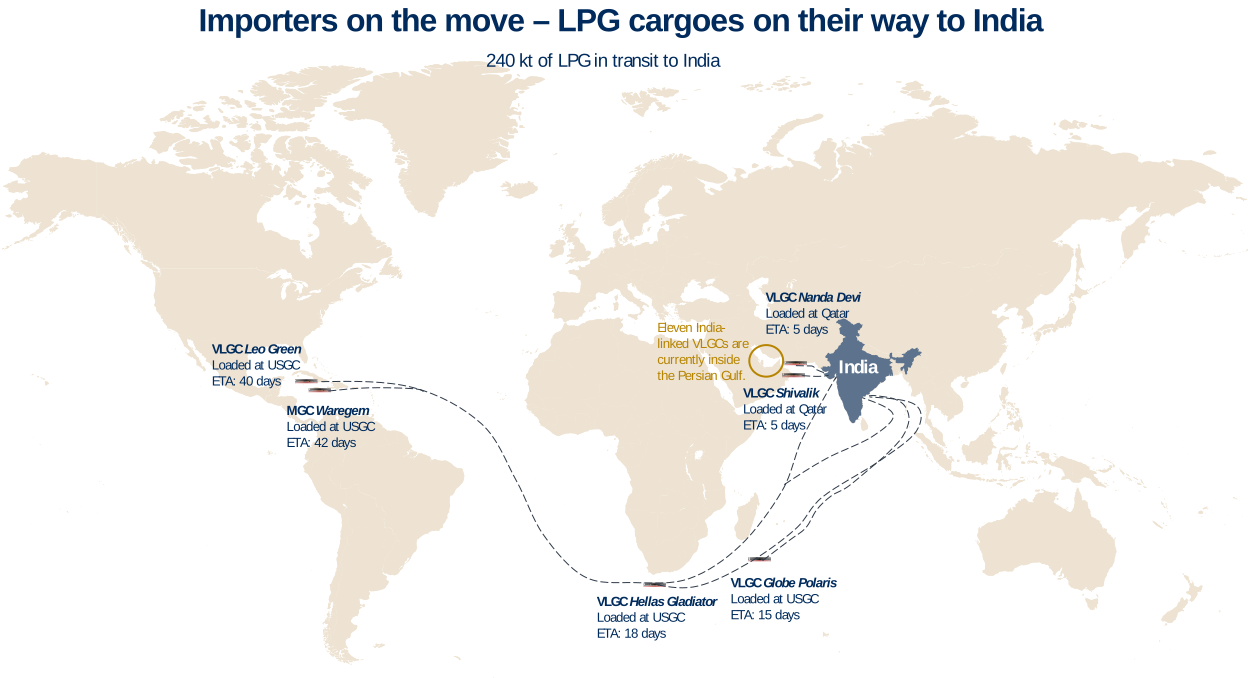
Source: Drewry Maritime Research
From a shipping perspective, the disruption is already reshaping trade flows. As Indian buyers turn to suppliers in the Atlantic Basin, long-haul voyages will become prominent, raising tonne-mile demand on routes typically served by VLGCs. The urgency to secure cargoes has led to a pivot towards MGCs to move smaller, available parcels quickly, even on longer routes. Overall, these factors will tighten vessel availability and keep freight rates volatile in the short term as the market rebalances.
2. Boosting domestic LPG production
The government has directed domestic refiners to maximise LPG recovery and expand domestic output by 10%, but the scope for rapid expansion looks far-fetched. LPG accounts for only 4–5% of total crude refining output. Consequently, even a 10% increase in refinery runs yields only a modest increase in LPG output.
Furthermore, domestic LPG production in itself is tied to the very region in conflict. Indian refineries are optimised to process medium- and heavy-sour crude from the Middle East, which yields higher LPG volumes than lighter crudes.
Since the conflict has disrupted crude oil flows from the region, domestic LPG production could actually decrease as refineries struggle to process unfamiliar crude slates. At the same time, broader disruptions in Middle Eastern crude supply are tightening India’s overall crude availability, further exacerbating the current conditions.
3. Prioritising residential consumption
To protect household consumption, the government, under the LPG Control Order, has curtailed feedstock to the petchem sector and placed curbs on industrial and commercial users. While this prioritises cooking over commerce, it comes at a high economic cost. Reduced industrial activity and feedstock shortages are expected to affect operating rates, potentially leading to increased inflation and unemployment or stagflation.
Summary
The prolonged conflict will amplify the damage, but even if the conflict were to end immediately, infrastructure losses in the Middle East and ongoing regional risks mean shipping conditions through the Strait are unlikely to return to normal quickly.
While Iran has allowed Indian ships to pass through the Strait, the high risk of attacks and the suspension of insurance coverage for ships in the Persian Gulf could constrain LPG supply, as shippers remain cautious, given the high capital risk. Thus, India remains in a precarious position, with sustained shortages likely to push industrial, commercial and residential sectors back toward traditional fuels such as coal or wood. Furthermore, major Indian petchem producers have declared force majeures, curtailing or shutting production completely and indefinitely.
LPG shipping has been facing disruption, which is not expected to end anytime soon. We expect further spikes in shipping rates due to high insurance premiums and expectations of further escalations, but long-term rates are unlikely to surge (like in VLCCs or LNG) due to ample fleet supply.
Return to...
Related Content
Key Contacts




© Copyright 2026 | Drewry Shipping Consultants Limited. All Rights Reserved. Website Terms of Use | Privacy Policy