
 close
close

We've brought all our trackers and market indices together in a single hub page. Please Register and Login to access this free content.


Hormuz LNG breakthrough: Four LNGCs eye the exit
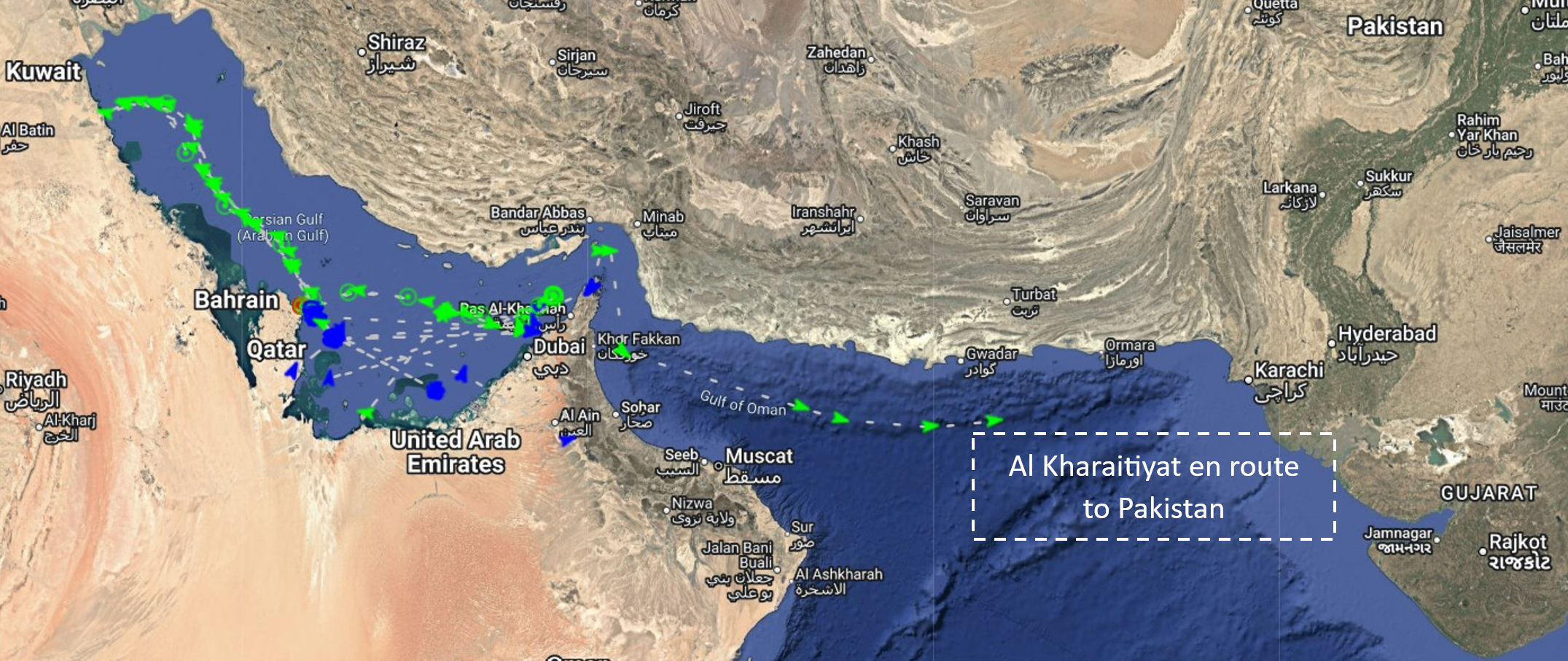
On 11 May, Al Kharaitiyat broke through Hormuz, heading for Port Qasim — the first Qatari LNGC to test supply resumption. The Q-flex LNGC loaded the cargo at Qatar’s Ras Laffan, igniting the discussions over supply resumption through the Strait of Hormuz.
Four more LNGCs eye the exit – LNGC Mizhem could reach Pakistan by 13 May
As of 11 May, 13 LNGCs remain inside the Strait of Hormuz, according to Drewry AIS, among which four laden LNGCs, including Disha, Patris, Mihzem and Al Daayen, have been showing patterns similar to those observed by Al Kharaitiyat - first loading at Ras Laffan, followed by AIS spoofing and exiting the Strait.
The similar trails suggest that more LNGCs are likely preparing to exit the Gulf. Among the four LNGCs, Mihzem could be the next to pass the Strait and reach Pakistan thereafter by 12 May 2026.
While two Adnoc LNGCs (One laden and one ballast) have exited the Strait since the conflict started, Al Kharaitiyat becomes the first Qatari LNGC to exit the Persian Gulf. The transit was possible under a direct government-to-government deal between Qatar and Pakistan with the support of the Iranian authorities. More LNG cargos (up to four, according to reports) could also transit the Strait of Hormuz for Pakistan.
LNG traffic collapse
LNGC transits through the Strait of Hormuz have dropped sharply since the conflict erupted, with a 60% drop in LNGC concentration in the Persian Gulf, the Gulf of Oman and the Arabian Sea.
Figure 1: LNGC traffic in the Persian Gulf down 61% since the start of the conflict
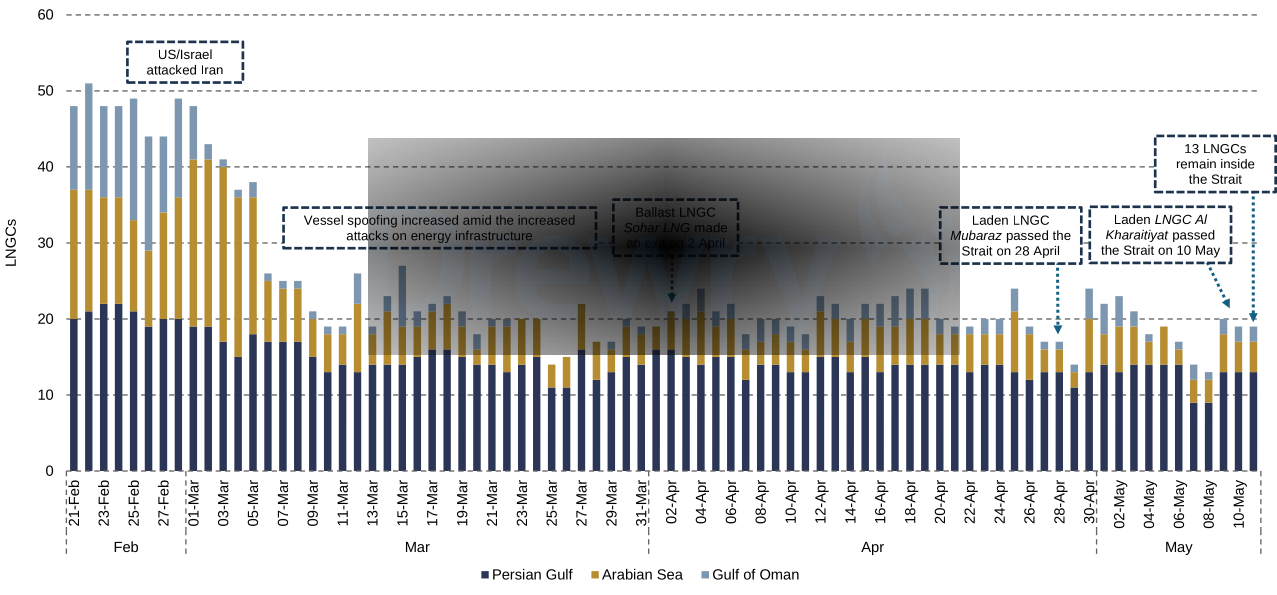
Source: Drewry AIS
Who’s next to negotiate?
While the current voyages from Qatar to Pakistan have piqued interest among market participants, Pakistan remains well-positioned to crack negotiations with Iran to secure Qatari cargoes.
The critical question: will other buyers strike similar deals with Iran to unlock Qatari cargoes? The possibility of other Asian buyers breaking such deals remains unclear, with QatarEnergy extending the force majeure until June, leaving shipments contingent on political negotiation rather than market demand. Furthermore, no LNGC has entered the Strait of Hormuz since the war began.
Kuwait’s workaround
According to Drewry AIS, Kuwait sourced 0.8 million tonnes of LNG between January and April 2026 (down 1 million tonnes from last year YTD), all from Qatar via LNGCs trapped inside the Gulf. In March, the volume was 0.14 million tonnes, and in April, 0.16 million tonnes. We project that Kuwait will import about 4 million tonnes in 2026 – all from Qatar, and still nearly half from 2025.
Pakistan’s exposure
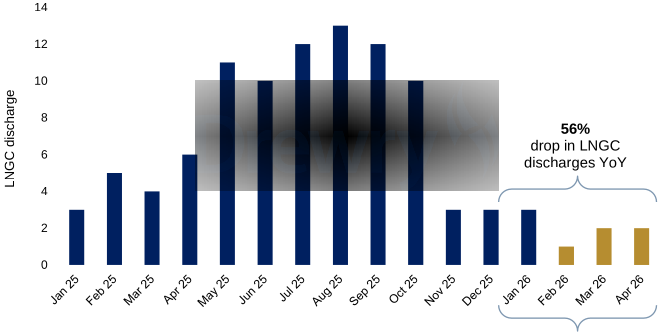
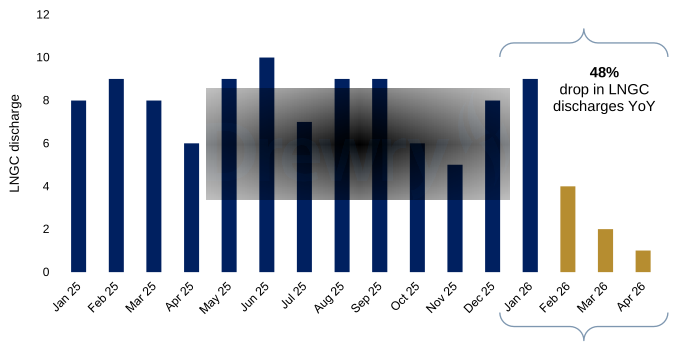
On the other hand, Pakistan, which usually saw 8 LNGC discharges per month on average, has witnessed a 48% drop after February, with the decline diminishing as the country had already lowered its imports before the war. Pakistan remains highly exposed to supply disruptions in the Middle East and has been facing a gas shortage since the conflict began, with the situation likely to worsen as summer demand approaches.
While current transits bring hope, normalcy still seems far
Selective transits raise hope for supply resumption, but they do not signal a return to normal trade. Some LNG supply will gradually resume through the Strait of Hormuz, but the recovery is unlikely to be meaningful in the near term. QatarEnergy’s force majeure and the absence of a definitive ceasefire or substantive negotiations among the US, Israel and Iran keep uncertainty high, with LNG shipping remaining highly sensitive to security developments, elevated war-risk premiums and route constraints.
As a result, until geopolitical tensions ease and force majeure declarations are lifted, LNG freight and trade disruptions are likely to remain volatile, with shipping dynamics driven more by risk management than by underlying supply-demand fundamentals, with a return to normal trading patterns appearing further away.
Return to...
Related Content
Key Contacts





© Copyright 2026 | Drewry Shipping Consultants Limited. All Rights Reserved. Website Terms of Use | Privacy Policy