
 close
close

We've brought all our trackers and market indices together in a single hub page. Please Register and Login to access this free content.


Iran closes the Strait of Hormuz—20% of global LNG supply at risk
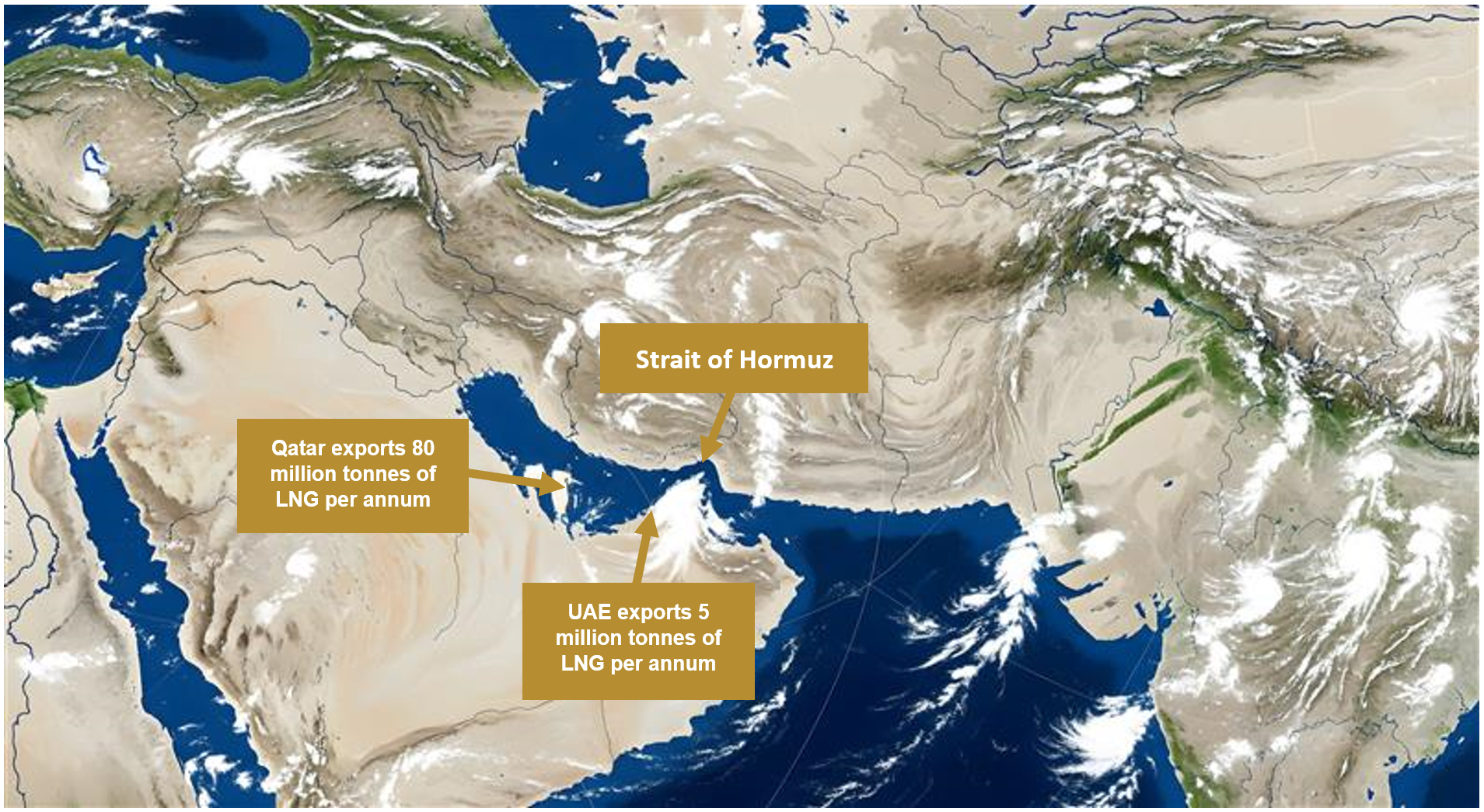
With the ongoing armed conflict in the Middle East, Iran confirms effectively blocking the Strait of Hormuz, through which 20% of the global LNG supply transits.
Drewry expects about 2 million tonnes of LNG supply from Qatar and the UAE to be choked on a weekly basis, however, if tensions persist, this could disrupt up to 5–6 million tonnes of supply per month. In the near term (one week), we expect LNG prices to rally, but shipping rates will not follow suit, as vessel idling will rise. Meanwhile, repositioning will remain limited, given that seasonal demand eases in Europe and remains largely subdued in Asia. However, vessel repositioning could surge if the current blockage prolongs, as Asian buyers will have to source alternative supplies, especially with the impending summer demand.
Impact of the closure on LNG shipping: Near term vs. short term
The following table recapitulates the impact on LNG under two scenarios: In scenario I, we assume that the closure persists only for a week, while in scenario II, we assume the blockage will persist for a month.
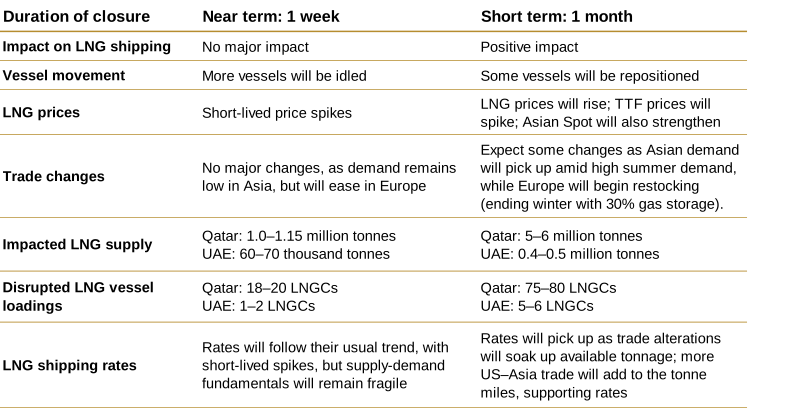
Note: LNG supply and vessel loadings have been estimated using Drewry AIS.
Source: Drewry Maritime Research
Key buyers under threat amid supply disruption in the Middle East
Asia: Asia sources 80–85% of the Middle Eastern LNG, with countries such as China and India heavily dependent on Qatar. If the blockade continues, these countries will have to substitute LNG from other destinations, leading to trade adjustments. While India, Japan, South Korea and Taiwan (China) could import more US LNG, the share of Russian LNG to China and other South Asian countries could rise. Meanwhile, higher exports from Australia are also likely, with China continuing to avoid US LNG unless the closure extends for several months.
Figure 2: Asian LNG imports from the Middle East (2025): China and India are at high risk as the Strait is officially closed
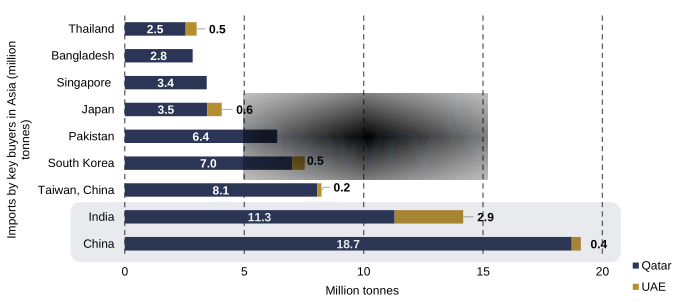
Source: Drewry Maritime Research, based on 2025 trade
Europe: While Europe’s exposure to Middle East LNG supplies has decreased since the Red Sea tensions, some countries, including Italy, Belgium and Poland, still import from Qatar and are most exposed to supply disruptions in the Middle East.
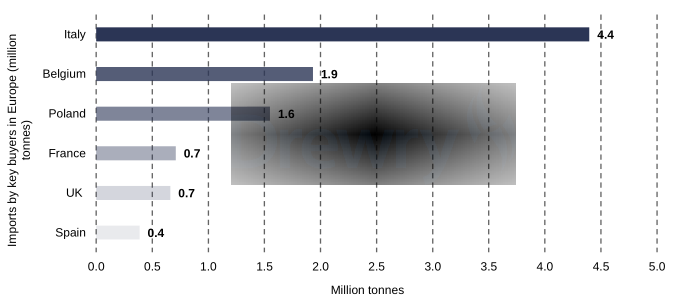
While both Asia and Europe remain affected by the closure of the Strait of Hormuz—Asia more than Europe—the former accounts for over 80% of the total Middle East exports and the latter accounts for 10–12%.
In a nutshell, if several LNGCs were to be idled and stationed near the Gulf of Oman, the availability of prompt vessels near East of Suez could surge, pressuring freight rates in the near term. However, if exports are disrupted or delayed for an extended period (e.g., a month), Asia will be compelled to source alternative supplies, which could increase tonne-mile demand and tighten effective supply, thereby supporting rates. In the event of rising global demand ahead of the summer, we could see competition between Asia and Europe intensify. However, higher prices could crowd out price-sensitive buyers in Asia, limiting the potential trade gains. Thus, rates would rise, but only to a certain extent despite trade readjustments.
Note: Stay tuned, we will keep you posted as the situation develops and its implications on LNG shipping.
Return to...
Related Content
Key Contacts




© Copyright 2026 | Drewry Shipping Consultants Limited. All Rights Reserved. Website Terms of Use | Privacy Policy