
 close
close

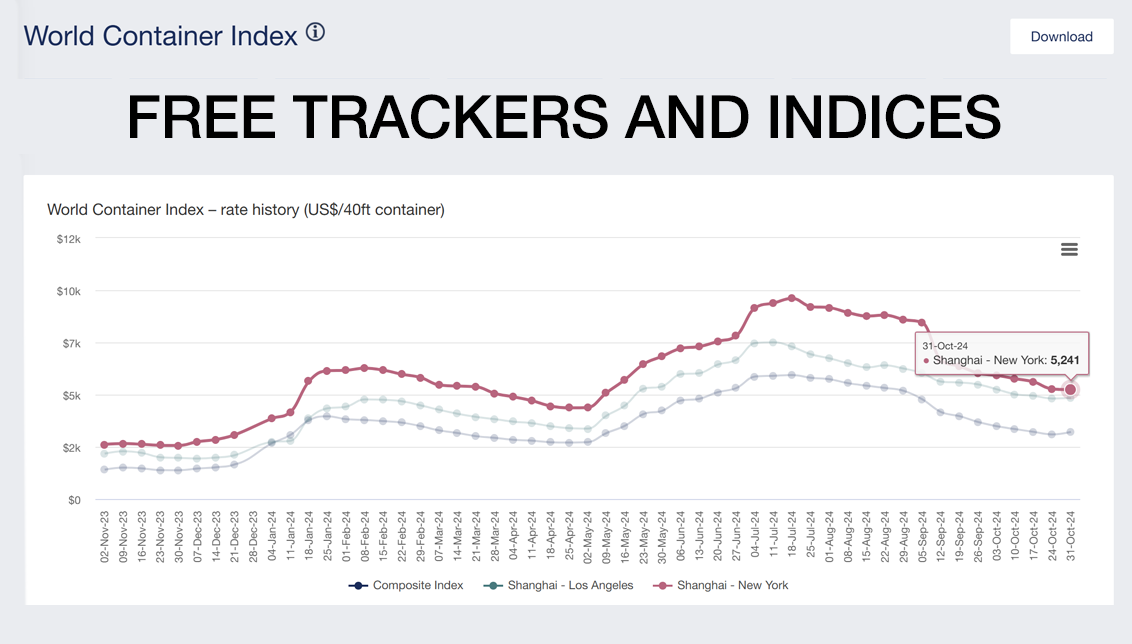
We've brought all our trackers and market indices together in a single hub page. Please Register and Login to access this free content.


Product tankers witness a boom in replacement demand despite signs of saturation
Orders for product-capable vessels (including IMO-class coated vessels) have been soaring, with 293 orders placed until September compared to 292 vessels in 2023. The surge in new orders is driven by the interest in MRs and LRs, while other segments are also registering massive orders. These two segments are the workhorses of the product tanker market, with one optimal for intra-regional trade and the other for long-haul trade. We have analysed the long-term prospects of these two vessel types.
Demand for product tankers has artificially surged due to the prevailing geopolitical tensions in the last two years - Russia-Ukraine and the Red Sea crisis. These tensions have supported shipping demand for product tankers and in turn, earnings. However, the long-term prospects for refined product trade are not so bright and new orders will be limited to replacement tonnage amid increasing regulations.
Rising share of old tonnage
Fewer demolitions have raised the average age of the fleet, as around 37% of the existing MR fleet (including IMO-class coated vessels) and 32% of the LR2 fleet are over 15 years. Increasing tanker earnings and a growing dark fleet are forcing owners to delay their scrapping decisions, leading to lower demolitions while deliveries remained higher.
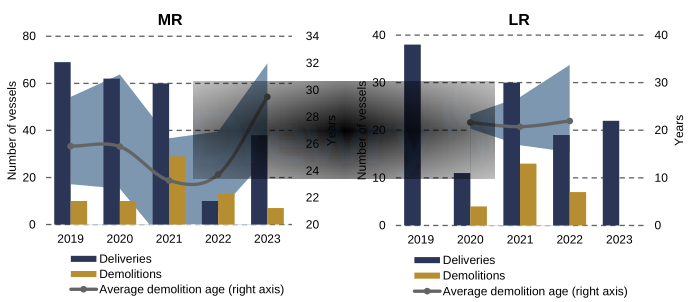
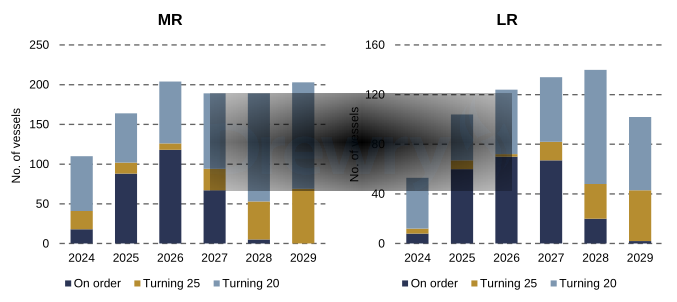
As most of the MR and LR fleets are turning 20 years old, the need for replacement tonnage has been increasing. Even after the surge in new orders in the last two years, the number of vessels turning 20 years of age is higher than potential deliveries. Thus, we expect new orders to remain firm in 2025.
Keeping pace with demand
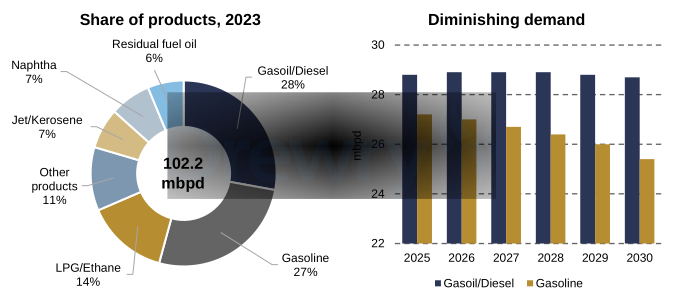
The demand side story shows a different picture, as gasoline and diesel demand, the two major refined products accounting for more than 50% of the product tanker trade, will moderate by the end of this decade due to the influx of EVs and a shift towards alternative fuel.
Conclusion
While the supply side looks promising with ageing tonnage, the demand side shows weak fundamentals in the long run, which calls for cautious ordering activity. However, orderings will remain robust in 2025 but will be limited to replacement tonnage that meets stringent environmental regulations rather than driven by demand projections.
Subscribe to Product Tanker Forecaster for more insights.
Return to...
Related Content
Key Contacts




© Copyright 2026 | Drewry Shipping Consultants Limited. All Rights Reserved. Website Terms of Use | Privacy Policy