
 close
close

We've brought all our trackers and market indices together in a single hub page. Please Register and Login to access this free content.


Strait of Hormuz update: VLGCs ballasting from Gulf of Oman; Asian petchem receives a serious blow
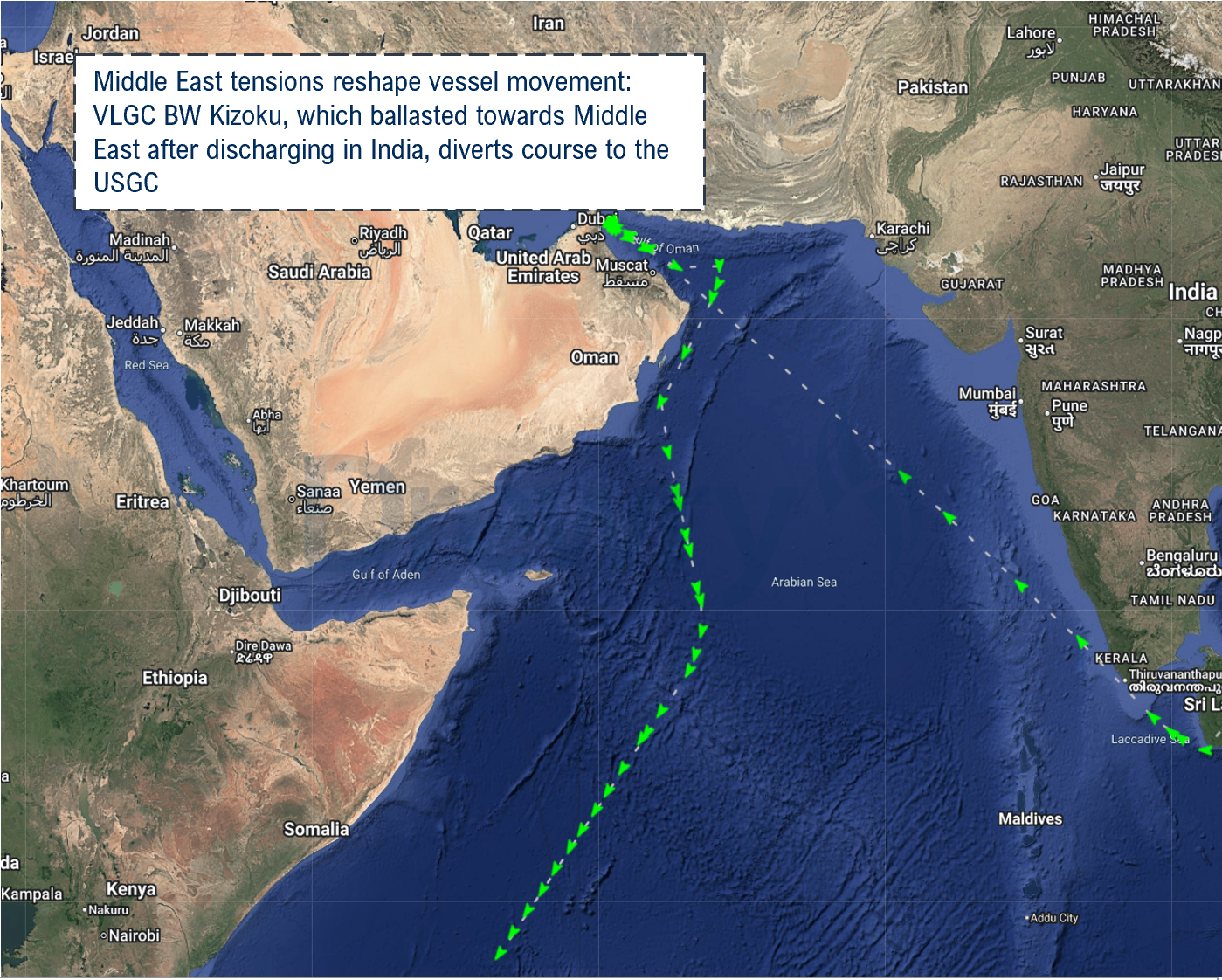
Drewry AIS showcases several VLGCs that reached or were idling in the Gulf of Oman have altered course towards the USGC as buyers scramble to procure alternative cargoes for the disrupted Middle Eastern LPG supplies. A series of force majeures in the Asian petchem sector are creating serious concerns for the petchem industry and shipping at large.
The blockade at the Strait of Hormuz following the escalating conflict in the Middle East has disrupted 40% of the global LPG supply. The disruption is particularly significant for Asian countries where LPG is a key residential fuel. In India, LPG is widely used as a cooking fuel, making demand relatively inelastic, and the current disruptions are poised to create ‘critical’ supply shortages.
To manage tightening supplies, the government has 1) restricted LPG deliveries to the petchem sector to around 65% of normal levels, 2) prioritised residential consumption, and 3) directed domestic refineries to boost LPG production and oil majors to procure alternative cargoes.
However, for the global petchem sector, a potential halt in shipments of naphtha and LPG (propane and butane) from the Arabian Gulf would create significant feedstock shortages, putting pressure on petchem producers. This, in turn, could reduce operating rates and disrupt global petchem trade.
For instance, traffic through the Strait of Hormuz accounts for about 24% of global naphtha supply. Any prolonged disruption would therefore significantly affect cracker operating rates, particularly in Asia, where many petchem plants rely heavily on imported naphtha.
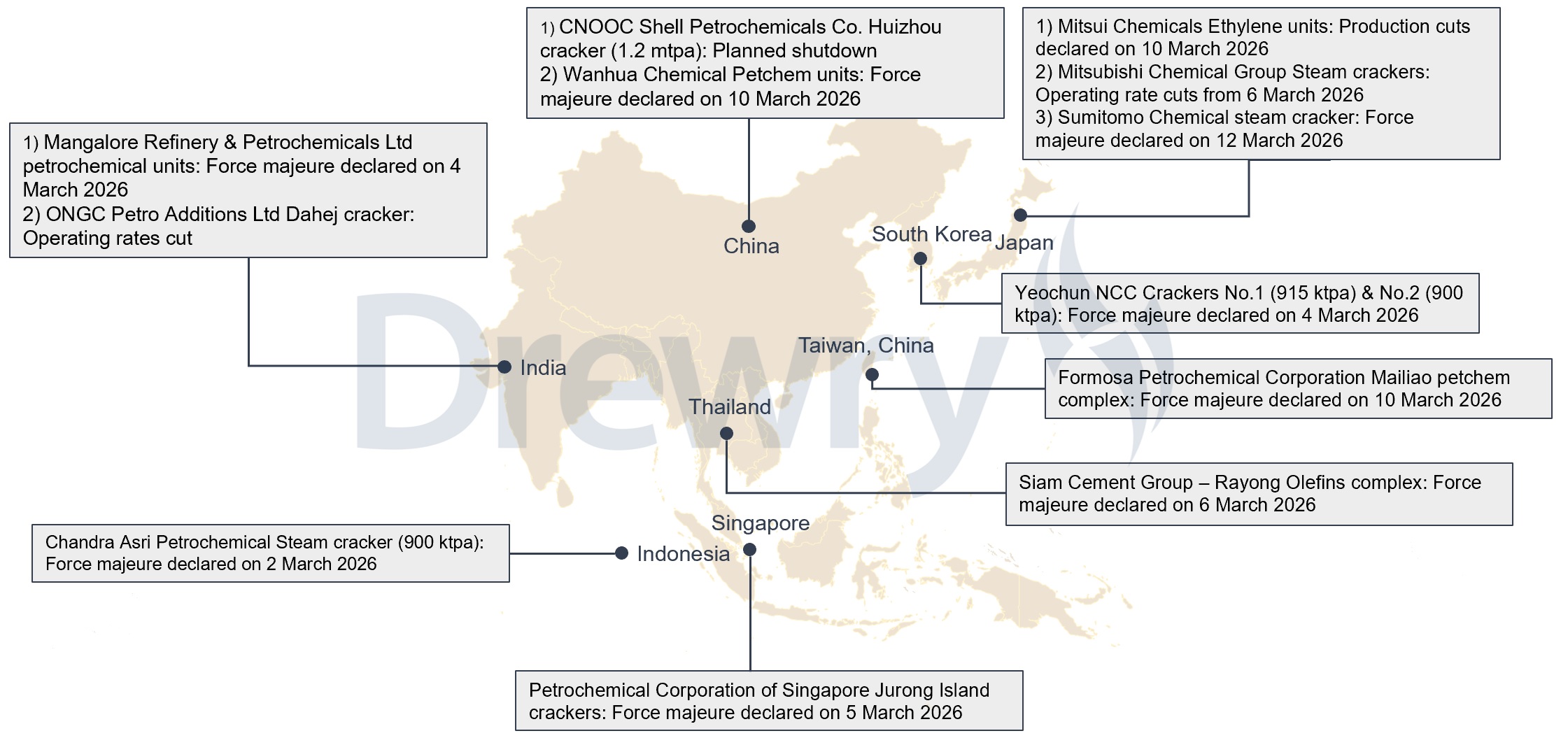
LPG and naphtha shortages (popular petchem feedstocks with heavy exposure to the Middle East) have triggered a wave of force majeures and planned shutdowns in Asia.
Figure 2: Asian petchem plants declaring force majeure amid feedstock shortages
Source: Drewry Maritime Research
The global petchem industry is facing dire circumstances due to the Middle Eastern conflict with surging feedstock prices or supply shortages forcing production shutdowns. Will this give the oversupplied market a chance to rebalance or create further troughs for the industry desperately looking for recovery?
Intra-Asia petchem shipping schedules are also poised to be disrupted with several vessels expected to become idle, impacting rates. Meanwhile, TC rates for smaller petchem carriers tend to be stable, changing monthly, but the duration of the conflict may significantly impact them as well.
Given India’s high exposure to the disruption, we will publish a dedicated update focusing on the country’s LPG supply outlook shortly.
Return to...
Related Content
Key Contacts





© Copyright 2026 | Drewry Shipping Consultants Limited. All Rights Reserved. Website Terms of Use | Privacy Policy