
 close
close

We've brought all our trackers and market indices together in a single hub page. Please Register and Login to access this free content.


Conflict in the Middle East: Will rising oil prices translate into higher ship operating costs?
The Middle East shipping trade has once again come under heightened scrutiny due to the conflict in the Strait of Hormuz. Although this conflict has already led to higher shipping rates and war-risk insurance premiums, it could substantially impact ship operating costs as well in the long term.
In this context, Drewry has evaluated the potential implications for ship operating costs across key cost elements, each of which is influenced by distinct factors.
1. Lubricants
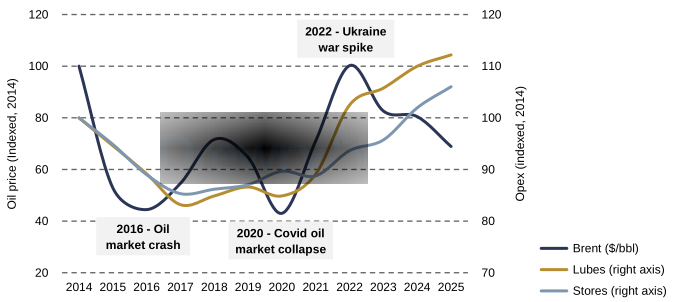
Various technical equipment used in ship operations depend heavily on oil-based products, particularly lubricants, which are produced and marketed by global oil majors such as Shell and BP. Therefore, a rise in oil prices could also increase the price of lubricants.
2. Stores
Technical stores such as chemicals, paints, cleaning products and other consumables often rely on petchem feedstock. With increasing oil prices, the production and transportation expenses for these resources are also likely to surge.
Figure 1: Brent price vs. lubes and stores costs
3. Spares
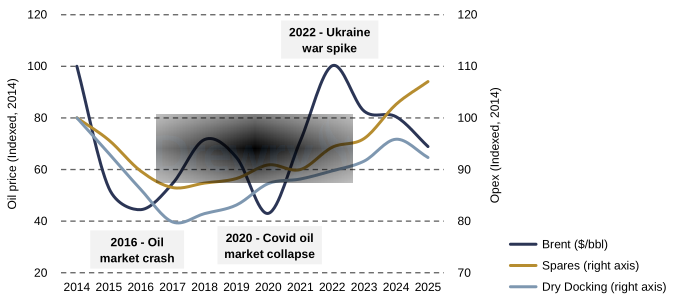
Components of marine machinery and engine parts are manufactured using energy-intensive processes including steel production and precision machining, and often transported over long distances.
As a result, rising oil prices can steadily drive-up the prices of spare parts.
However, when oil prices rise, the prices of opex components that depend on oil do not increase immediately since shipowners rely on current stocks and long-term supply agreements. As a result, there is a time lag before high oil prices are reflected in ship operating costs, which applies to all technical costs.
4. Dry docking costs
The costs associated with dry docking are one of the largest recurring expenses for shipowners. These expenses are closely connected to energy prices through shipyard operating costs, including steel plates, welding, heavy machinery operations and electricity use.
A rise in oil prices can also gradually raise dry-docking expenses. Since vessels head to the yards for dry docking every 2.5 to 5.0 years based on survey requirements, shipowners might incur high repair costs only in the next scheduled docking period.
Another important factor is the availability of docks. Existing ship-repair facilities in the Persian Gulf may experience operational issues with limited access for vessels because of the prevailing security concerns in the region. Ships would be left with no option but to avoid the shipyards in the region and rely more on other locations such as Asia or Europe, which would likely increase docking expenses and waiting periods.
Figure 2: Brent price vs spares and dry docking costs
Outlook
The long-term impact of the Gulf conflict on ship operating costs will depend largely on the duration of the geopolitical tensions and their influence on global oil markets.
In the near term, shipowners are likely to experience the most immediate cost pressures through higher insurance premiums and potential operational adjustments. However, if elevated oil prices persist, several operating cost components—including lubricants, technical supplies, spare parts and dry-docking services—could gradually trend higher despite efforts by ship operators to maintain legacy prices from suppliers and delay non-urgent repairs.
As a result, monitoring the relation between energy price cycles and vessel operating costs will remain an important consideration for navigating in an increasingly uncertain geopolitical environment.
Subscribe to Drewry Ship Operating Costs Annual Review and Forecast 2025/26 for more insights.
Return to...
Related Content
Key Contacts





© Copyright 2026 | Drewry Shipping Consultants Limited. All Rights Reserved. Website Terms of Use | Privacy Policy