
 close
close

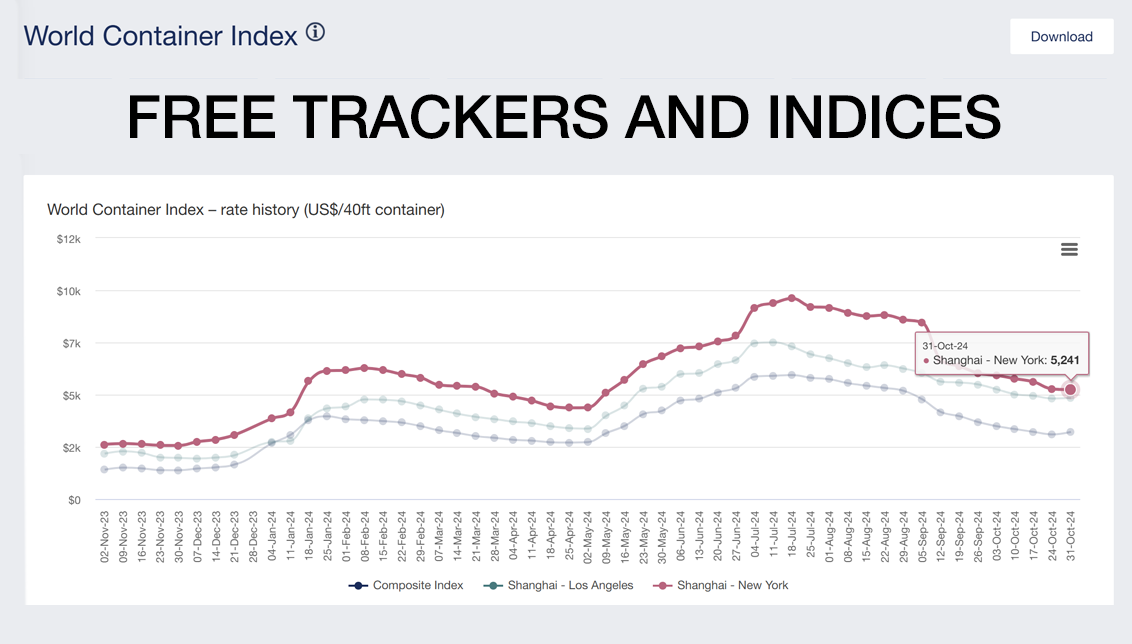
We've brought all our trackers and market indices together in a single hub page. Please Register and Login to access this free content.
Maritime Research
Container Shipping Financial Health Check 2026
January 2026
2026 a year of rising capacity and sharply reduced profits
Supply constraints due to the Red Sea crisis drove freight rates higher in 2024, resulting in high profitability. However, by the end of 2024, freight rates started to decline as sufficient capacity became available across the Cape of Good Hope (COGH). In 2025, an overcapacity situation developed across major routes, supported by the constant influx of newbuild vessels and low demolition activity, leading to a further decline in freight rates. However, partial relief for carriers came from high container volume growth driven by front-loading of cargo to avoid tariffs and robust demand for Chinese imports from emerging markets such as Africa and Southeast Asia. A steady increase in the number of vessels sailing via the Suez Canal is effectively increasing global container shipping capacity and will put further downward pressure on freight rates.
Our latest ‘Financial Health Check’ of 12 major carriers (based on their published 9M25 financials) shows a decline in their Z-scores, while they remain financially stable. However, the industry faces key questions regarding how far freight rates will decline and how long carriers will be able to sustain the downturn. This report examines the forces shaping container shipping and the risk profiles of leading carriers.
Key findings within this year’s report includes:
- Through 2026, the overcapacity situation is expected to worsen further as fleet expansion exceeds volume growth, while the added possibility of a complete reopening of the Suez Canal could lead to a steep decline in EBIT.
- The Altman Z-score analysis shows a YoY decline in the financial position of container shipping companies in 9M25, signalling that financial health has weakened a bit. Intra-Asian carriers are performing well, with SITC reporting the highest Z-score among all carriers.
- Debt rose across the container shipping industry in 2025, and carriers liquidated investments to finance fleet expansion. Orderbooks for some carriers grew multi-fold in 2025. With lower earnings and continued ordering, we expect debt to continue to increase in 2026.
- European carriers have increased their LNG-fuelled newbuild orderbook to mitigate rising costs from tightened EU regulations, with the EU ETS covering 100% of in-scope emissions from 2026. intra-Asian carriers maintain a largely conventionally fuelled fleet orderbook, benefiting from the lower cost burden of leaner environmental standards.


More Information
Contents:
- Executive summary
- Industry Update
- Company Update
Companies Featured:
- AP Moller Maersk
- Hapag-Lloyd
- Samudera Shipping Line Ltd
- SITC International Holdings
- Wan Hai Lines Ltd
- Ocean Network Express Pvt Ltd
- Yang Ming Marine Transport Corp
- ZIM Integrated Shipping Services Ltd
- Evergreen Marine Corp Taiwan Ltd
- COSCO SHIPPING Holdings Co Ltd
- HMM Co Ltd
- Orient Overseas International Ltd
Events
TOC Americas
Bulk Terminals A Coruña 2026

© Copyright 2026 | Drewry Shipping Consultants Limited. All Rights Reserved. Website Terms of Use | Privacy Policy